Every evening an uncovered outdoor pool gives away a good share of the heat you paid for during the day, along with hundreds of litres of water and a dose of chlorine. A swimming pool cover is the cheapest way to stop that. The right one keeps the water warmer, cleaner and safer, and for many pools it pays for itself within a season or two.
The trouble is choosing. Solar bubble covers, foam covers, automatic slatted covers, safety covers and winter covers all do different jobs, and the price runs from a couple of hundred pounds to well over £15,000. This guide is for UK pool owners deciding which swimming pool covers suit their pool and how they use it. It explains how each type works, what it costs, how much heat and water it saves, and how to look after it, with a calculator so you can estimate the savings for your own pool.
Why Swimming Pool Covers Matter So Much
Most of the heat an outdoor pool loses goes out through the water's surface, not through the walls and floor. By far the biggest part of that is evaporation: each litre of water that evaporates takes a large amount of heat with it. Figures from the Sports Council's energy data, still used by UK cover manufacturers, break the losses down like this.
Because a cover sits directly on the water, it blocks almost all of that evaporation. GeoBubble cover material is tested to prevent around 98% of it. That has three knock-on benefits for UK pool owners.
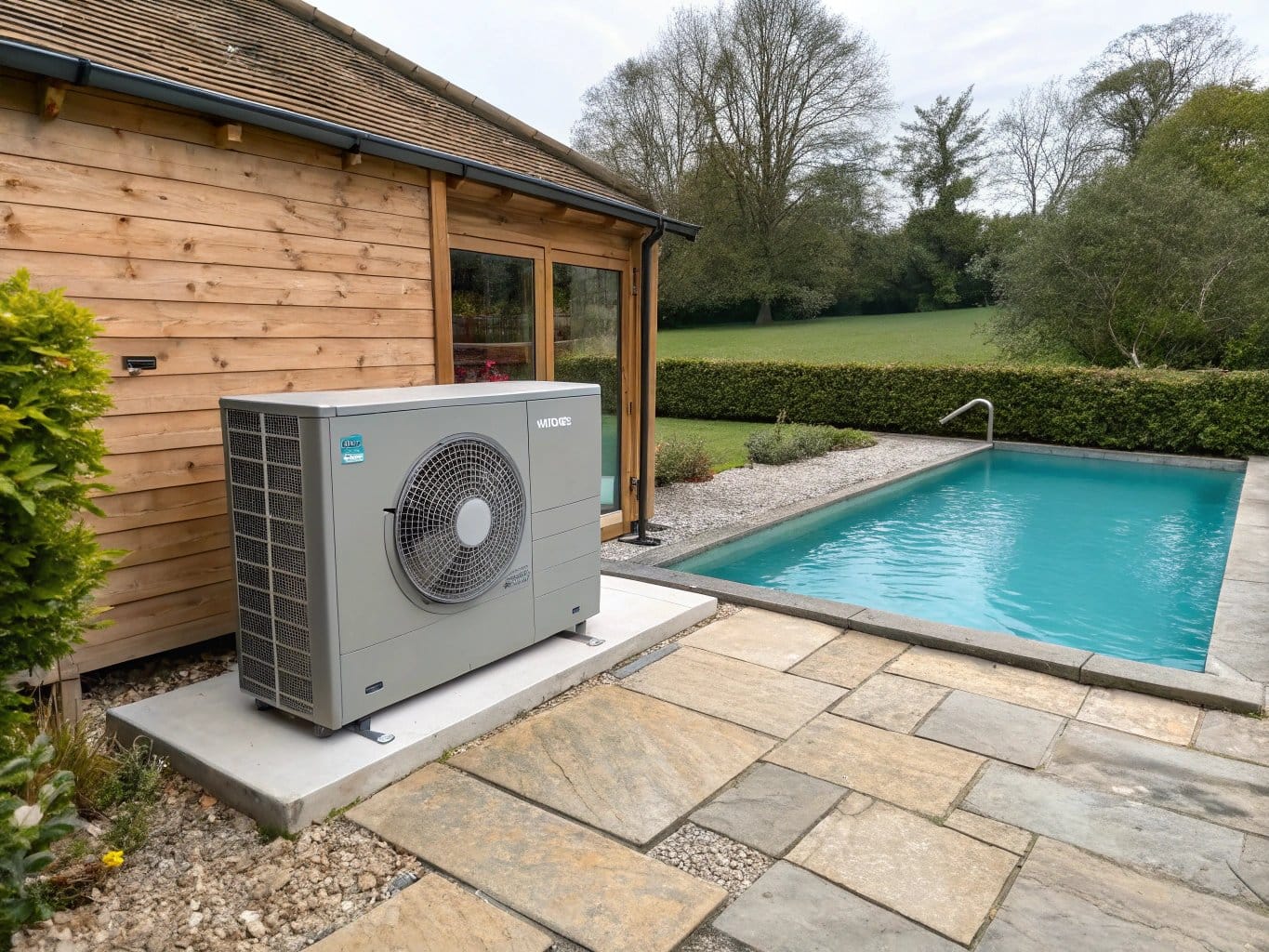
- Lower heating bills. Your heat pump or boiler only has to replace the heat the pool loses, so cutting the losses cuts the running time. This is why a cover is the first thing we recommend to anyone heating a pool.
- Less water to top up. Research carried out with Brighton and London Metropolitan Universities found that a typical 8 x 4 m pool in the UK loses around 32,000 litres a year to evaporation if it is left uncovered.
- Less chlorine and cleaning. Sunlight breaks down chlorine, and leaves, pollen and insects use it up. Keeping them off the water means fewer chemicals, less time with the net and a lower risk of the water turning green.
The Main Types of Swimming Pool Covers
Pool covers fall into two groups. Summer or energy covers go on whenever the pool is not being used during the swimming season, to hold in heat. Winter and safety covers are about keeping debris, light, children and animals out. Some covers do a bit of both, but none does everything equally well.
Solar bubble covers
A solar cover is a sheet of UV-stabilised plastic with air bubbles on one side, laid on the water bubbles down. Sunlight passes through and warms the water, while the bubbles and the sheet stop evaporation and trap heat at night. Clear and lightly tinted covers let in the most solar heat; blue and silver or gold-backed covers let in a little less but reflect more heat back into the pool.
They are sold by thickness in microns. 400 micron is the standard for in-ground pools and usually comes with a three to four-year pro-rata warranty. 500 micron covers are around 25% heavier, last longer and typically carry a six-year warranty, but do not hold in much more heat. The newer GeoBubble shape lasts noticeably longer than old round-bubble covers because it removes the thin weak spot at the corner of each bubble. Thin 200 micron covers are made for above-ground pools and will not last long on a garden pool.
Foam heat retention covers
Foam covers use 5 to 8 mm of closed-cell foam between tough woven top and bottom sheets. They insulate better than any bubble cover: Plastica rates a 5 mm cover at 87% of heat loss saved and its 8 mm cover at 89%, against 86% for a 400 micron solar cover. The trade-off is that they block the sun, so they add no free heat, and they are heavier and bulkier on a reel.
Foam is the usual choice for indoor pools, where there is no sun to capture and cutting evaporation also reduces condensation and the load on the dehumidifier, and for outdoor pools heated to a high temperature. Most foam covers are rated for water up to about 29°C, so check before using one on a warmer pool. For a middle ground, insulating bubble materials such as RaeGuard claim around 90% of the performance of 5 mm foam at a lower price.
Automatic slatted covers
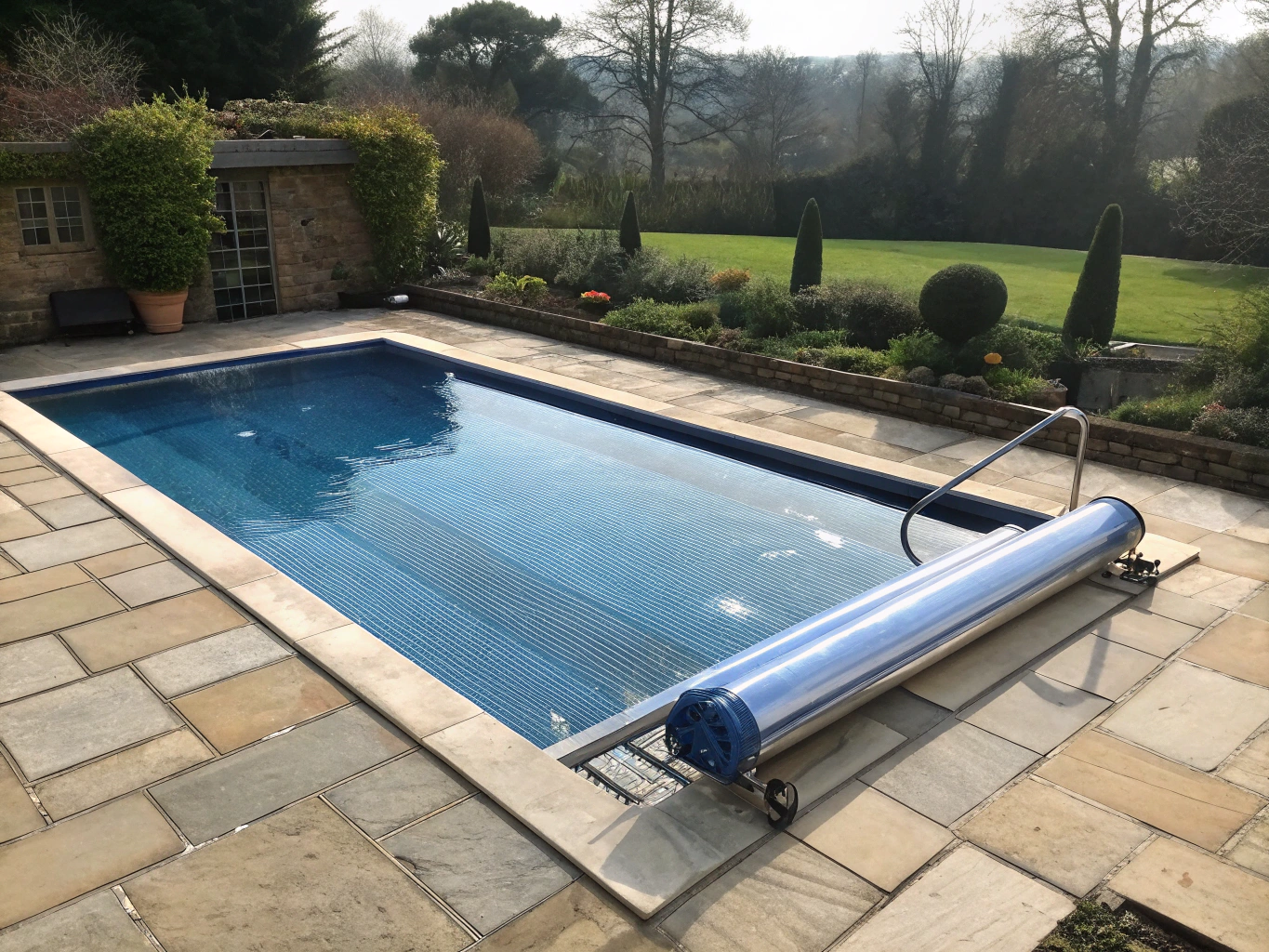
A slatted cover is a row of hollow, sealed PVC or polycarbonate slats linked together, which float on the water and wind onto a motorised roller. The roller can sit on the deck under a bench, in a pit below the paving, or below the waterline at the end of the pool. You turn a key and the pool is covered in a minute or two, which means it actually gets covered every time.
Clear or solar slats add some heat from the sun; opaque slats insulate better and stop algae-feeding light. They are the most convenient cover there is, but also the most expensive, and they work best on a rectangular pool. They are far easier to plan into a new pool build or full refurbishment than to add to a finished pool.
Safety covers
A safety cover is designed to take the weight of a child or animal without letting them reach the water. Common types are bar covers, a heavy PVC sheet stretched over aluminium bars that rest on the pool surround, and track covers that run in rails along each side. Many are wound on and off by hand or with a motor.
Winter debris covers
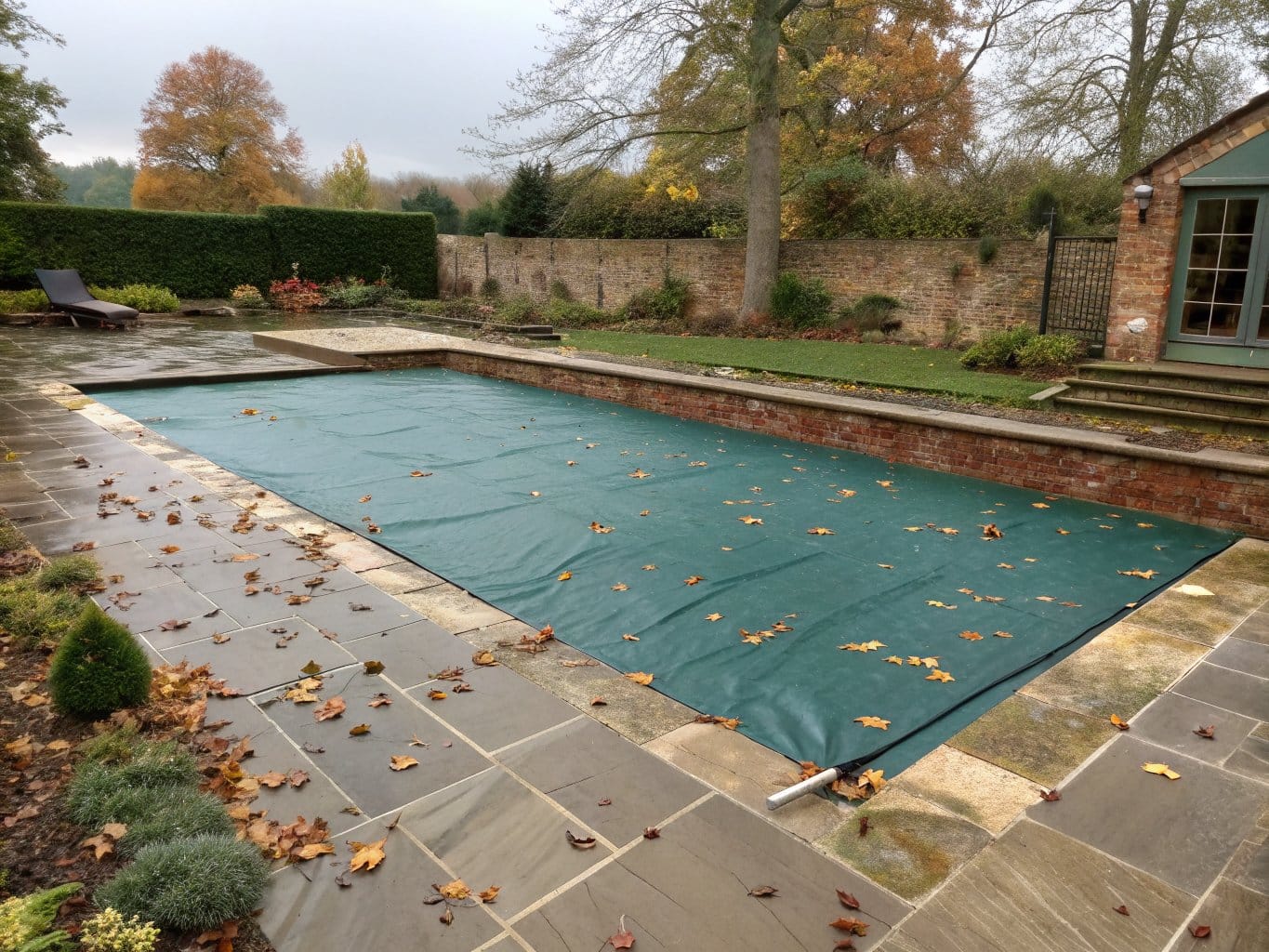
Once a pool has been closed for the season, a winter cover keeps leaves, twigs and light out until spring. Mesh covers let rain and snowmelt drain through, so water never pools on top, but fine dirt and some light get in. Solid covers block all light, which stops algae growing over winter and makes spring opening easier, but rainwater collects on top and has to be pumped off. Both are usually held taut by straps fixed to anchors set into the paving.
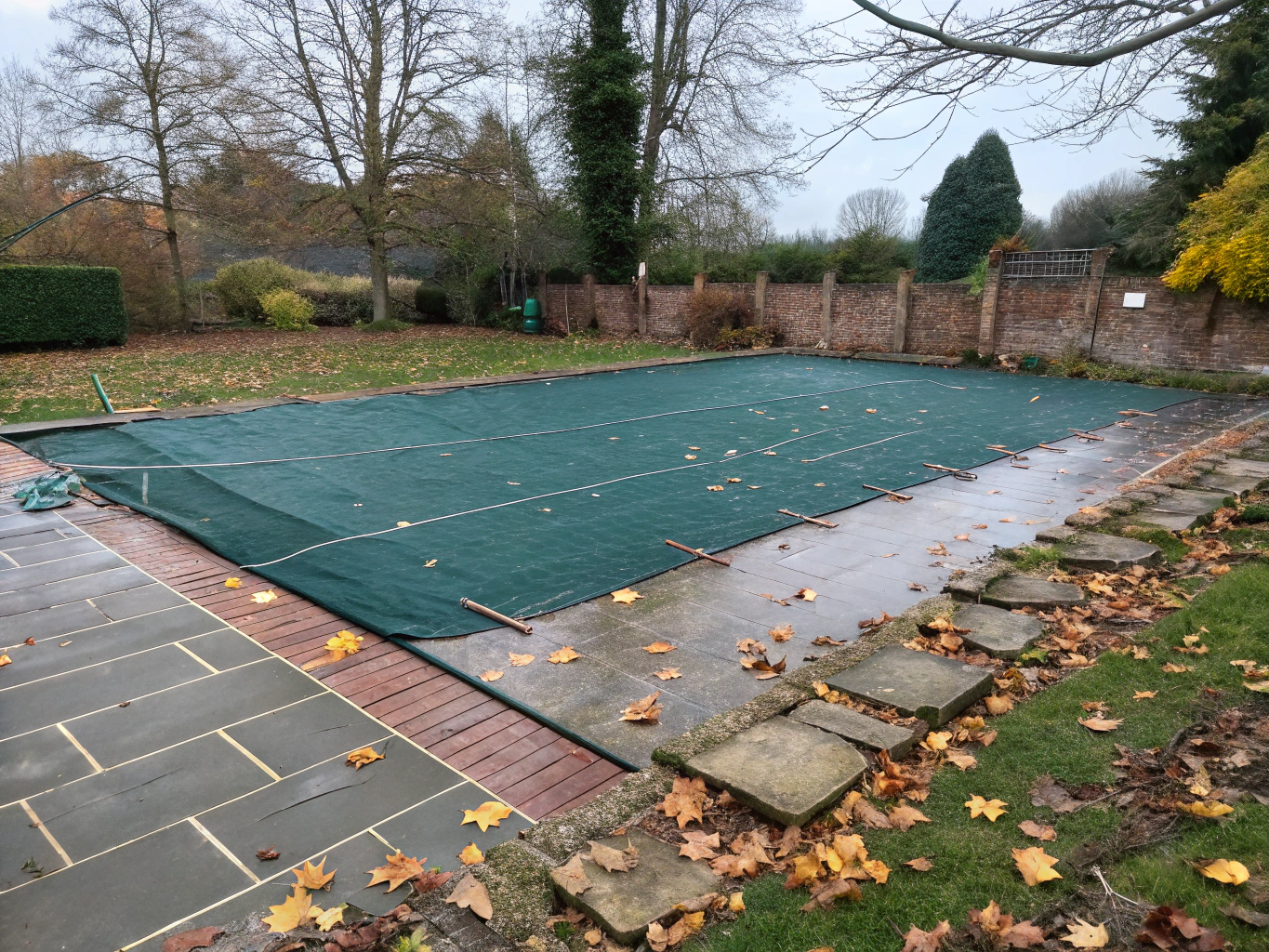
A winter cover is one step in closing a pool properly. Our guide on how to winterise a swimming pool covers the rest, from lowering the water and protecting the plant to the final chemical dose.
Swimming Pool Covers Compared: Cost, Savings and Lifespan
This table puts the main types side by side. Prices are typical UK figures for a domestic in-ground pool of around 8 x 4 m, before any reel or fitting unless stated.
| Cover type | Main job | Heat retention | Child safety | Typical life | Typical UK cost |
|---|---|---|---|---|---|
| Solar bubble, 400 micron | Summer heat and evaporation | Good (about 86%) | None | 3 to 5 years | About £5 to £25 per m² |
| Solar bubble, 500 micron | Summer heat and evaporation | Good | None | 6 to 8 years | About £10 to £30 per m² |
| Foam, 5 to 8 mm | Insulation, indoor pools | Best (87 to 89%) | None | Several years (3-year pro-rata warranty is typical) | About £60 to £75 per m² |
| Automatic slatted | Convenience, heat, cleanliness | Very good | Some models tested to NF P90-308 | Many years, with regular servicing | From around £15,000 installed |
| Bar or track safety cover | Safety, debris | Moderate | Yes, if tested to NF P90-308 | Many years | Typically from about £1,500; much more for automatic track covers |
| Winter debris cover | Keeping a closed pool clean | Low | Only if rated as a safety cover | Several winters | Usually a few hundred pounds, more for made-to-measure with anchors |
Indicative prices from UK suppliers published in 2025 and 2026. Heat retention figures are manufacturers' ratings of the share of heat loss saved while the cover is on. Made-to-measure covers, shaped pools, reels and fitting all add to the cost, so treat these as a guide rather than a quote.
On a standard 8 x 4 m pool, that means roughly £250 to £550 for a good 400 or 500 micron solar cover and £1,900 to £2,400 for a foam cover, plus a reel. A reel is not optional in practice: without one, a large cover is heavy, awkward and easily damaged, and a cover that is a nuisance to remove ends up left in the shed.
How Much Can a Swimming Pool Cover Save?
Savings depend on two things: how good the cover is, and how many hours a day it is actually on the pool. A cover that saves 86% of heat loss saves nothing while it sits on the reel. Manufacturers' claims for heated pools range from around a quarter off the heating bill for a commercial indoor pool to more than 70% for an outdoor pool covered every night, and most UK solar covers are said to pay for themselves within a year.
Use the calculator below for a rough idea of what a cover could save on your pool. If you heat with a heat pump, our heat pump running cost calculator will help you estimate the heating figure to put in.
Pool Cover Savings Calculator
For a slatted cover, choose the solar option for clear slats or 5 mm foam for opaque slats. Leave the heating cost blank if your pool is not heated.
Worked example: an 8 x 4 m pool heated with a heat pump costs, say, £900 a season to keep at 27°C without a cover. Put a 400 micron solar cover on for 20 hours a day and it could save in the region of £450 to £650 a season, plus around 26,000 litres of water a year. A £400 cover and reel would pay for itself in the first summer.
Which Pool Cover Do You Need?
Most pools end up with two covers: one for the swimming season and one for winter. Start from how you use your pool.
| If your pool is... | Consider |
|---|---|
| Outdoor, unheated, used in summer | A clear or lightly tinted solar cover on a reel, to gain free heat and stretch the season, plus a winter cover. |
| Outdoor and heated by a heat pump or boiler | A 500 micron solar or insulating bubble cover, or foam if you heat to a high temperature, used every night. A winter cover once the pool is closed. |
| Indoor | A foam heat retention cover or an automatic slatted cover, to cut heating and condensation. |
| In a garden with young children or pets | A safety cover tested to NF P90-308, or an automatic cover that meets it, alongside fencing and supervision. |
| Used daily and you want no effort | An automatic slatted cover, ideally planned in during a build or renovation. |
| Under trees, or closed from October to April | A well-fitted mesh or solid winter cover on deck anchors. |
How to Use and Look After Your Pool Cover
A cover that is used well will last years longer than one that is left in the sun or soaked in chlorine. A few habits make the difference.
- Bubbles down. A solar cover goes on with the bubbles touching the water. Upside down, it works far less well.
- Keep it out of the sun when it is off the pool. A rolled-up cover in hot sun can overheat and break down quickly. Use a reflective storage sheet over the reel, or roll it up in the shade.
- Take it off when you shock the pool. High chlorine levels trapped under a cover attack the plastic. Leave the cover off until the chlorine has fallen back to its normal range. Our guide on how to shock a swimming pool explains how long that takes.
- Keep the water balanced. Water that is too acidic or over-chlorinated shortens the life of every cover. The ranges in our swimming pool water chemistry guide keep both the water and the cover healthy.
- Clean it occasionally. Hose off leaves and dirt before rolling the cover up, so debris does not end up in the pool next time it goes on.
- Check the fit each spring. Covers shrink slightly with age. Gaps at the edges let heat and debris through, so a cover that no longer reaches the walls is due for replacement.
Common Swimming Pool Cover Mistakes
Buying a cover without a reel
Dragging a wet cover off an 8 x 4 m pool by hand is a two-person job. Without a reel the cover gets folded, creased and left off, and its savings disappear.
Choosing the thinnest, cheapest material
A 200 micron cover made for above-ground pools may last a single summer on a garden pool. A 400 or 500 micron GeoBubble cover costs more at the start but far less per year.
Assuming any cover makes the pool safe
Only a cover designed and tested as a safety cover will hold a child's weight. A floating cover can make a pool more dangerous, because it hides the water.
Leaving gaps around a winter cover
Leaves get in at a loose edge and rot on the pool floor all winter, which is one of the commonest causes of a green pool in spring. Fit the cover taut on proper anchors and check it after storms.
Need Help Choosing Swimming Pool Covers? DP Pool Services Can Help
Whether you need a replacement solar cover, a safety cover for a young family or an automatic cover as part of a renovation, DP Pool Services has been caring for pools across Bedfordshire, Hertfordshire, Buckinghamshire, Cambridgeshire, Northamptonshire and North London for over 30 years.
We measure, supply and fit swimming pool covers of every type, made to measure for your pool, along with reels and winter cover anchors. We can also fit your winter cover as part of our pool winterising service and check it at your spring opening.
Call us on 07748 142023 or get in touch online for a free, no-obligation quote.
Frequently Asked Questions
Do pool covers keep heat in?
Yes. Most of a pool's heat is lost from the surface, mainly through evaporation, and a cover stops almost all of it. A 400 micron solar cover is rated to save about 86% of heat loss while it is on, and foam covers 87 to 89%. See why covers matter.
Do solar pool covers work in the UK?
They do, though the biggest benefit in the UK comes from holding heat in overnight rather than from heating by sunshine. Manufacturers quote gains of several degrees in good weather, which is enough to add weeks to the swimming season of an unheated pool.
How much does a swimming pool cover cost?
For an 8 x 4 m pool, expect roughly £250 to £550 for a good solar cover, around £2,000 for a foam cover, from about £1,500 for a manual safety cover and from around £15,000 for an automatic slatted cover. Reels and fitting are extra. See the comparison table.
Which way up does a solar pool cover go?
Bubbles down, touching the water. The flat side faces the sky.
How long does a pool cover last?
A 400 micron solar cover typically lasts three to five summers and a 500 micron cover six to eight, depending on sun, chemistry and storage. Foam covers usually come with a three-year pro-rata guarantee and often last longer, and slatted covers last many years with regular servicing.
Can I leave my solar cover on over winter?
It is not a good idea. A solar cover is not made to hold leaves, rainwater or snow, and it will sag, stretch and let debris in. Once the pool is closed, switch to a proper winter cover and store the solar cover clean, dry and out of the sun.
Is a pool safety cover a legal requirement in the UK?
No. There is no UK law requiring a domestic pool to have a cover, fence or alarm. If you want a safety cover, the French standard NF P90-308 is the benchmark to ask for. See safety covers.
Key Takeaways
- Around two thirds of an outdoor pool's heat loss is evaporation, and a cover stops almost all of it.
- For most outdoor pools, a 400 or 500 micron solar cover on a reel is the best value: it saves heat, water and chlorine and usually pays for itself within a season.
- Foam covers insulate best and suit indoor and warmer pools; automatic slatted covers are the most convenient but start at around £15,000.
- Only a cover tested as a safety cover, such as to NF P90-308, will stop a child reaching the water.
- Savings depend on use: a cover only works while it is on the pool, especially overnight.
Choosing the right swimming pool covers comes down to how you use your pool, whether you heat it, and who uses the garden. Get that right and the cover will repay its cost many times over.
Related Articles
- Swimming Pool Heat Pumps: How They Work, What They Cost & Are They Worth It?: how a cover cuts heat pump running costs.
- How to Winterise a Swimming Pool: Complete UK Guide: closing the pool and fitting the winter cover.
- Green Swimming Pool? Causes, Fixes & How to Prevent It: why debris and sunlight turn a pool green.
- How to Shock a Swimming Pool: When, How Much & Why: and why the cover should come off when you do.