
The swimming season is over, the leaves are starting to drop and the water in your pool is getting colder every week, so this is the time to winterise your swimming pool. If you close it down properly now, you can take the cover off in spring and find clear water, a working pump and no cracked pipework. If you rush it or skip it, you could be facing a green pool, a split filter or a repair bill before you have even had a swim.
This guide explains how to winterise a swimming pool in the UK, step by step. It covers when to do it, the difference between a full closure and keeping the pool ticking over, how to protect the pump, filter and heat pump from frost, which winter cover to choose, and what to check over the winter months. It is written for homeowners with outdoor pools in Bedfordshire, Hertfordshire, Buckinghamshire, Cambridgeshire, Northamptonshire and London, but the process is the same for most outdoor pools in the south of England.
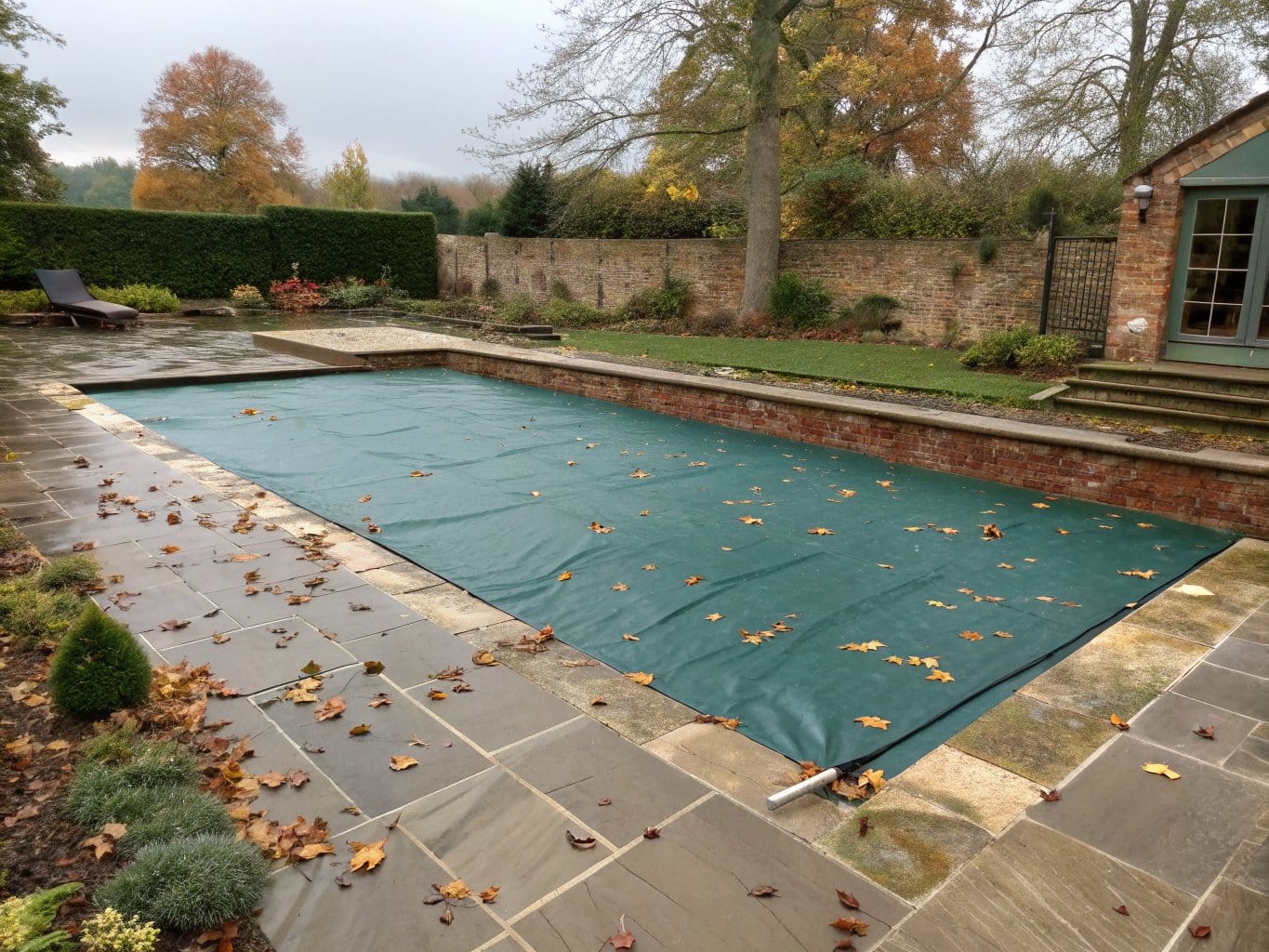
When to Winterise a Swimming Pool in the UK
The best guide is water temperature, not the calendar. Once nobody is swimming and the water has dropped below roughly 12 to 15°C, algae growth slows right down and the pool can be put into winter mode. Close it while the water is still warm and algae keeps growing under the cover, which is how many pools end up green in spring.
At the other end, you want the job finished before the first hard frost. Once water freezes inside a pump housing, multiport valve or heat pump, the damage is already done. In practice that gives most pools in our area a window from late September to the end of October, with sheltered or heated pools often running a little later.
A simple temperature guide
| Water temperature | What it means | What to do |
|---|---|---|
| Above 15°C | Algae can still grow quickly | Keep running and treating as normal |
| 12 to 15°C | Algae growth slowing, swimming season over | Book or plan your winterising |
| Below 12°C | Ideal closing conditions | Winterise now |
| Frost forecast | Risk of freeze damage to plant | Drain equipment or make sure frost protection is working |
If you heat your pool and swim into October, simply winterise when you stop using it. The timing matters less than making sure the plant is protected before temperatures fall below freezing.
Full Closure or Keeping It Running: Which Is Right for Your Pool?
There are two ways to look after an outdoor pool over a UK winter. Both work well when done properly, and the right choice depends on your equipment, how exposed the pool is and how much you want to do between November and March.
| Full closure (passive) | Keeping it running (active) | |
|---|---|---|
| Pump and filter | Switched off, drained and protected | Run for a few hours a day, plus automatically in frost |
| Frost protection | Drained plant, winter plugs, ice compensators | Frost thermostat starts the pump when temperatures approach freezing |
| Chemicals | Winterising chemicals added at closing | Low-level chlorine maintained, tested regularly |
| Electricity | Minimal over winter | Ongoing pump running costs |
| Spring opening | More work to recommission | Quicker, water usually in better condition |
| Best for | Most domestic outdoor pools, exposed sites, older equipment | Pools with a reliable frost stat and variable speed pump |
Full closure
This is what most people mean by winterising. The water is cleaned, balanced and treated, the level is lowered, the plant is drained and the pool sits under a winter cover until spring. It is the safest option if your pump does not have frost protection or the plant room is unheated.
Keeping the pool ticking over
Some owners prefer to keep water moving all winter. Moving water is much less likely to freeze, so the pump runs for a few hours each day (early morning is the coldest part of the day) and a frost thermostat switches it on automatically when temperatures approach 0°C. With a variable speed pump, running continuously at a low speed is often cheaper than it sounds. The catch is that a power cut or a tripped breaker during a cold snap leaves you unprotected, so it suits pools that are checked regularly.
How to Winterise a Swimming Pool: Step-by-Step
The steps below are for a full closure, which is the most common approach for domestic outdoor pools. Allow a week from start to finish, because the phosphate treatment and shock both need time to work before you add your winter chemicals.
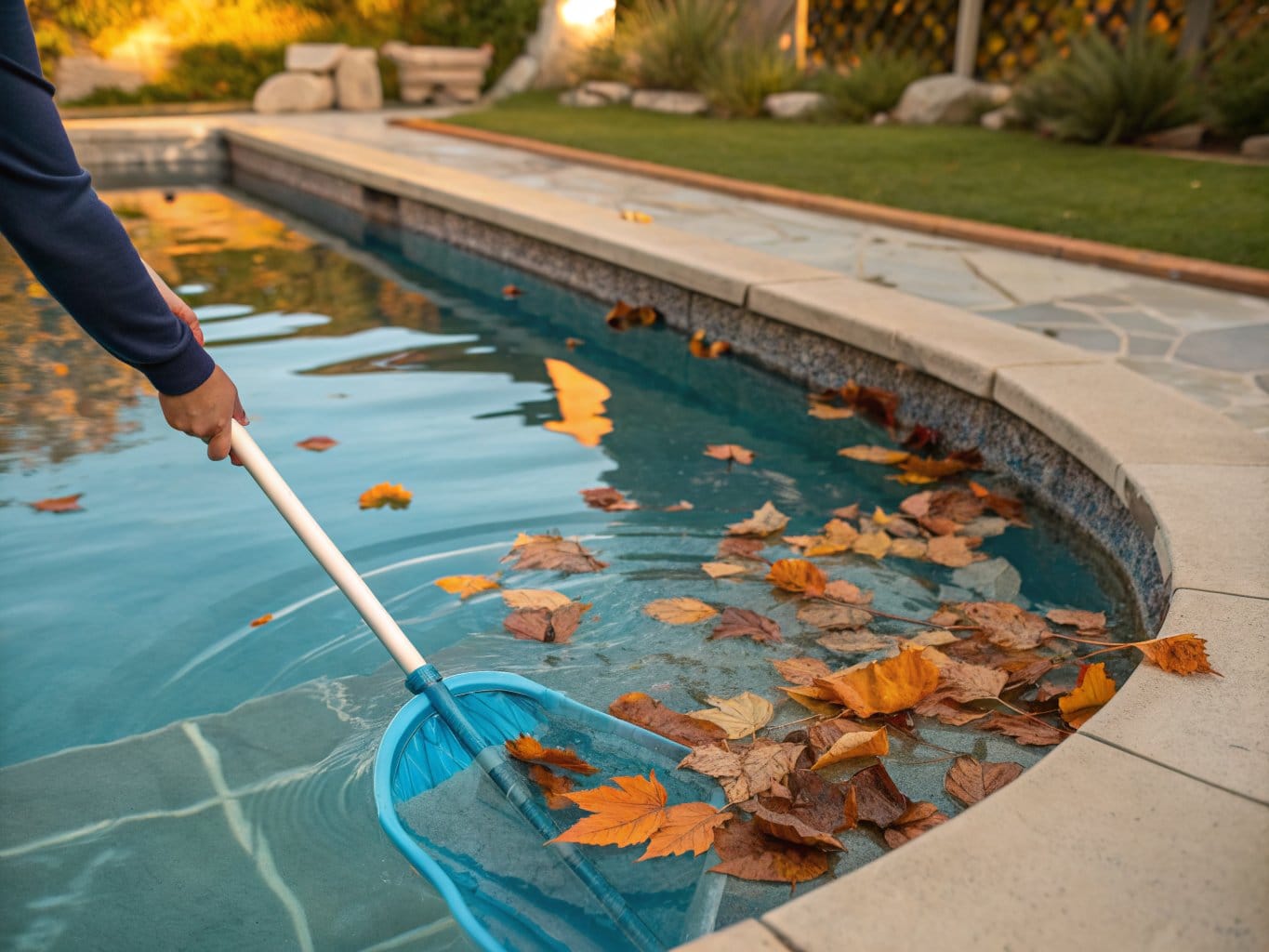
Step 1: Clean the pool thoroughly
Net out leaves, brush the walls and floor, and vacuum the pool to waste if you can. Leaves left sitting on the floor over winter release tannins that stain liners and tiles, and they feed algae. Empty the skimmer baskets and pump strainer basket, and clean the waterline while it is still easy to reach.
About a week before closing, add a phosphate remover. Phosphates are a food source for algae, and lowering them before the pool is covered gives your winter chemicals a much easier job.
Step 2: Test and balance the water
Balanced water protects the pool surface and equipment while it sits unused for months. Aim for:
- pH: 7.2 to 7.6
- Total alkalinity: 80 to 120 ppm
- Calcium hardness: within the range recommended for your pool finish (tiled and concrete pools generally need more than liner or fibreglass pools)
Correct the alkalinity first, then the pH, and give each adjustment time to circulate before retesting. Our guide to swimming pool water chemistry explains each reading and how to adjust it.
Step 3: Shock the pool
A shock dose of chlorine clears out bacteria, organic waste and any early algae before the cover goes on. Dose in the evening, keep the pump running, and follow our step-by-step guide on how to shock a swimming pool for the right quantity for your pool size.
Then wait. Most winter algaecides are weakened by very high chlorine, so let the free chlorine fall back to around 3 ppm before moving on. This usually takes 24 to 36 hours.
Step 4: Add winter algaecide
Add a winter algaecide or a winterising chemical kit while the pump is still running so it mixes through the whole pool. Doses vary by product: as an example, one common UK winter algaecide is dosed at 1 litre per 20,000 litres, while others treat more than twice that volume. Always follow the label, and use our pool volume calculator below if you are not sure how many litres your pool holds.
Step 5: Clean the filter and lower the water level
Backwash a sand or glass filter until the sight glass runs clear, or hose down cartridge filters and let them dry. Then lower the water level. You are not draining the pool, just bringing the water below the skimmer mouth and, in most cases, the return inlets, so that water cannot sit in the pipework and freeze.
| Cover type | Typical water level |
|---|---|
| Solid or opaque winter cover | About 10 to 15 cm (4 to 6 in) below the skimmer |
| Mesh debris cover (lets rain through) | Lower still, up to 30 cm or more below the skimmer, as rainwater will raise it |
| Pool staying in active mode | Normal level, pump keeps running |
Your cover manufacturer's guidance takes priority, because some covers are designed to rest on the water and need it higher.
Step 6: Drain and protect the pump, filter and heat pump
This is the step that prevents the most expensive winter damage. Water left inside equipment expands as it freezes and can split pump housings, filter tanks and valve bodies.
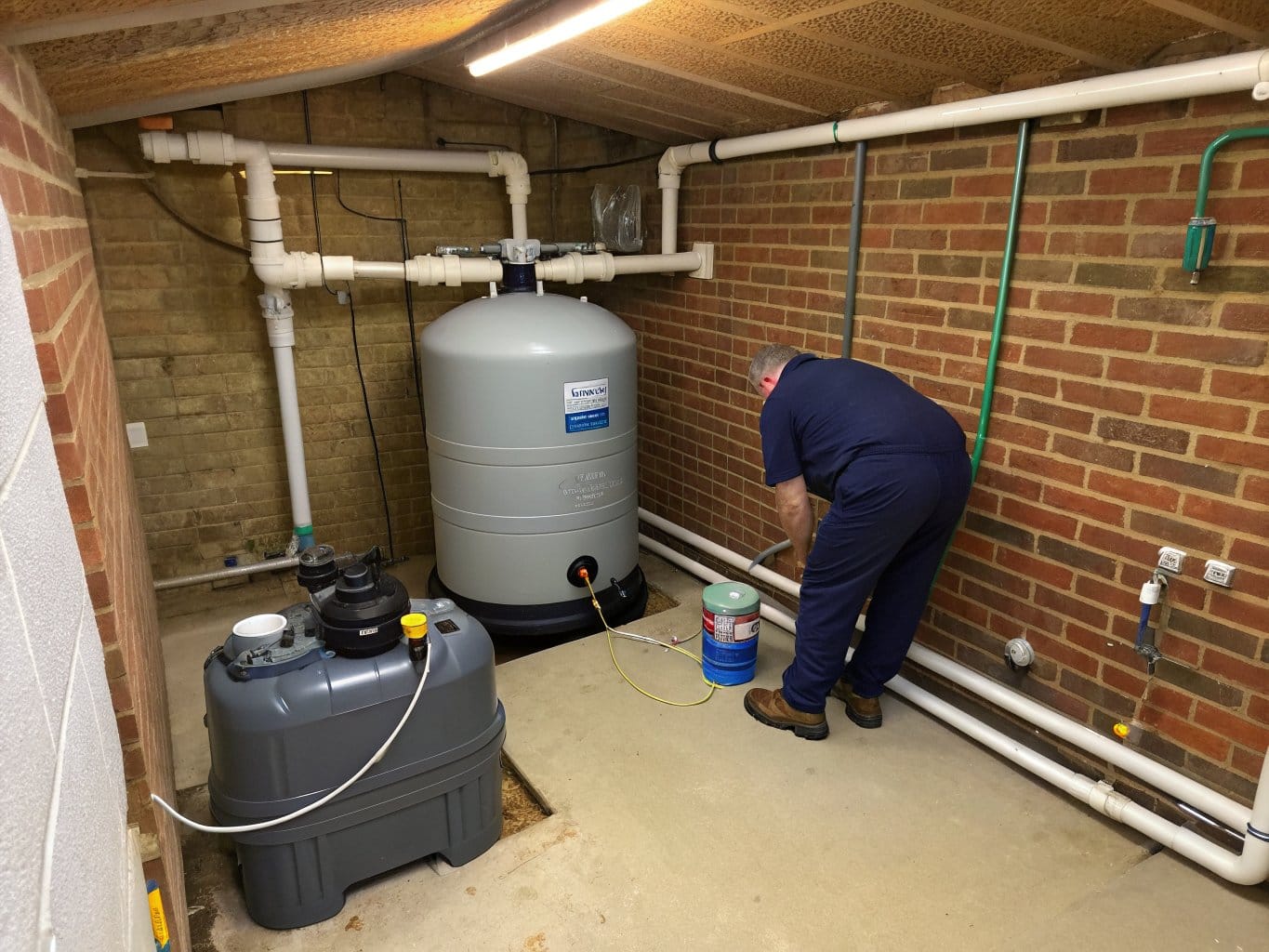
- Isolate the power to the pump, heater, heat pump, chlorinator and any automatic dosing at the consumer unit.
- Pump: remove the drain plugs and the strainer basket. If the pump is easy to disconnect, store it somewhere dry and frost-free.
- Filter: open the drain at the base of the tank and let it empty. Set the multiport valve to its winter position, or between two settings if it has none, and make sure the valve body is drained.
- Heat pump: close the isolating valves, undo the water connections so the heat exchanger can empty, then dry off residual water and fit a protective cover.
- Pipework: blow the water out of the skimmer and return lines with a wet and dry vacuum, then fit winter plugs to the returns.
- Salt chlorinators and UV units: drain the cell or chamber, and remove and store the cell if the manufacturer recommends it.
Step 7: Fit ice compensators and skimmer protection
Ice expanding against the pool walls and inside the skimmer can crack tiles, coping and skimmer bodies. Floating ice compensators (or a few sealed plastic bottles partly weighted with gravel) absorb that pressure. Put a couple in the pool and one in each skimmer, or fit a purpose-made skimmer winter plug.
Step 8: Fit the winter cover
Remove ladders, handrails, automatic cleaners and the solar cover, clean them and store them away. Then fit your winter cover and tension it properly, using its anchors, springs or water bags. A well-fitted cover keeps leaves out, blocks the sunlight that algae needs and makes the pool far safer over winter.
Winterising Different Types of Pool
The steps above apply to most pools, but a few details change depending on how your pool is built.
Choosing a Winter Pool Cover
Your summer solar cover is not a winter cover. It is designed to float on warm water and trap heat, and left on over winter it lets light through, collects debris and degrades quickly. A proper winter cover is fixed to the surround and designed to handle wind, rain and leaves for months at a time.
| Cover type | How it works | Pros | Cons | Typical cost* |
|---|---|---|---|---|
| Mesh debris cover | Tensioned mesh fixed to anchors in the surround | Rain drains through, so no standing water on top | Some fine debris and light get through | From around £590 for a 12 x 24 ft pool |
| Solid or opaque debris cover | Tensioned PVC that blocks almost all light | Stops algae growth and keeps water cleaner | Needs a drain panel or pumping off rainwater | From around £840 for a 12 x 24 ft pool |
| Water bag cover | Solid cover held down by water-filled tubes around the edge | No anchors needed in the paving | Bags need checking and topping up | Cover plus about £18 to £27 per bag |
| Safety cover | Heavy-duty tensioned cover rated to take weight | Strongest protection for children and pets | Highest cost, professional fitting needed | Made to measure, quoted per pool |
*Indicative made-to-measure UK retail prices for a 12 x 24 ft (3.7 x 7.3 m) rectangular pool, autumn 2026. Larger or irregular pools cost more.
If you are not sure which suits your pool, we supply and fit summer and winter pool covers and can measure up at the same visit as your winterising.
Pool Volume and Water Level Calculator
Winter chemical doses are based on your pool's volume, and it helps to know how much water you are taking out when you lower the level. Enter your pool's measurements below.
Winterising Calculator
Average depth = (shallow end depth + deep end depth) ÷ 2
Swimming Pool Winter Care: What to Check Until Spring
A winterised pool is not a forgotten pool. A quick look every few weeks catches small problems before they become spring repairs.
| How often | Check |
|---|---|
| After storms | Clear leaves and branches off the cover. Pump off standing water from solid covers so the weight does not stretch or tear them. |
| Every 2 to 4 weeks | Check the cover is still tensioned and anchors or water bags are secure. Check the water level has not risen back up to the skimmer. |
| Monthly | Test the water through the cover opening. Aim to keep pH around 7.4 and a small chlorine residual. |
| Mid-winter | Add a top-up dose of winter algaecide if your product recommends it, usually around January or February. |
| If you keep the pool running | Check the frost thermostat actually switches the pump on, and that the breaker has not tripped after a power cut. |
| Early spring | Once air temperatures are consistently above about 7°C, start checking chlorine levels and plan your pool opening. |
When the weather turns, our swimming pool opening service handles the recommissioning, and a well-winterised pool is usually far quicker and cheaper to bring back into use.
Common Winterising Mistakes to Avoid
Closing too early
If the water is still above 15°C, algae keeps growing under the cover. This is the most common reason for opening the cover in April to a green swimming pool.
Draining the pool
Emptying a pool to protect it from frost causes more damage than it prevents, especially with liner and fibreglass pools. Lower the level only as far as your cover and skimmer require.
Leaving water in the multiport valve or heat pump
These are the two components most often split by frost. Draining the filter tank is not enough if water is still sitting in the valve body or the heat exchanger.
Using a solar cover as a winter cover
Solar covers let light through and are not fixed down. Over winter they sink, trap debris and break down in the cold.
Adding algaecide straight after shocking
Very high chlorine breaks down many algaecides. Wait until free chlorine has dropped back to around 3 ppm.
Using car antifreeze
Automotive antifreeze is toxic and must never go into pool pipework. If you want extra protection in the lines, use a product sold specifically as non-toxic pool antifreeze, although draining and plugging the lines is usually enough in the south of England.
When to Call a Professional
Plenty of owners winterise their own pools, and the chemical side is simple once you have done it once. It is worth getting help if:
- You have a heat pump, gas heater, salt chlorinator or automatic dosing system that needs isolating and draining
- You are not sure where all the drain plugs and valves are on your plant
- The water is already cloudy or green and needs treating before it can be closed
- You want a new winter cover measured and fitted
- You would rather have the pool checked over by someone who can spot a worn seal or a failing pump before winter
If the water is already hazy, our guide to why a pool goes cloudy will help you clear it before closing.
Need Help Winterising Your Swimming Pool? DP Pool Services Can Help
Whether you want the whole job done for you or just a hand with the plant room, DP Pool Services has been caring for pools across Bedfordshire, Hertfordshire, Buckinghamshire, Cambridgeshire, Northamptonshire and London for over 30 years.
Our swimming pool winterising service includes the closing chemicals, draining and protecting your equipment, and supplying and fitting summer and winter covers. We also offer regular pool cleaning and maintenance and spring pool opening.
Call us on 07748 142023 or get in touch online for a free, no-obligation quote.
Frequently Asked Questions
Can I winterise my pool myself?
Yes. Cleaning, balancing, shocking and adding winter algaecide are all jobs a confident pool owner can do. The part that needs most care is draining the pump, filter, valve and any heat pump, because missed water causes frost damage. If you are unsure, see our step-by-step guide or ask a professional to handle the plant room.
What month should you winterise your pool in the UK?
For most outdoor pools in the south of England, between late September and the end of October. Go by water temperature: once it is below about 12 to 15°C and you have stopped swimming, it is time. See when to winterise above.
What chemicals do you put in a pool for winter?
A phosphate remover about a week before closing, pH and alkalinity adjusters to balance the water, a chlorine shock, then a winter algaecide once chlorine has fallen back to around 3 ppm. Many suppliers sell these together as a winterising kit.
Should I drain my swimming pool for winter?
No. Lower the water to just below the skimmer, but never empty the pool. Liners can shrink and tear, and concrete or fibreglass shells can be damaged by groundwater pressure when empty.
Do I need pool antifreeze in the UK?
Usually not. If the pipework is blown through and plugged properly, there is little water left to freeze. Non-toxic pool antifreeze is an extra safeguard for very exposed sites. Never use car antifreeze.
Should I leave my pool pump running in winter?
You can, if the pool is set up for it. Running the pump for a few hours a day with a frost thermostat as backup keeps water moving and stops it freezing. If there is no frost protection, a full closure with the plant drained is safer. Compare both approaches above.
Can I leave my solar cover on over winter?
It is not recommended. Solar covers are not fixed down, let light through and break down in cold weather. Clean and dry it, roll it up and store it out of direct sun, then fit a proper winter cover.
Key Takeaways
- Winterise when the water drops below about 12 to 15°C, typically late September to the end of October, and always before the first hard frost.
- Allow about a week: phosphate remover first, then balance and shock, then add winter algaecide once chlorine falls to around 3 ppm.
- Lower the water below the skimmer but never drain the pool completely.
- The pump, filter, multiport valve and heat pump must be fully drained, or protected by a working frost thermostat.
- Use a fitted winter cover rather than your solar cover, and check it after storms and every few weeks.
- Knowing how to winterise a swimming pool properly makes spring opening quicker, cheaper and far less likely to start with a green pool.
Related Articles
- Swimming Pool Water Chemistry: pH, Chlorine & Alkalinity: what each reading means and how to balance it before closing.
- How to Shock a Swimming Pool: When, How Much & Why: dosing and timing for the pre-winter shock.
- Green Swimming Pool? Causes, Fixes & How to Prevent It: what to do if your pool comes out of winter green.
- Why Is My Pool Cloudy? Causes & How to Clear It Fast: clearing hazy water before you close up.
0 Comments